“I’ve already taken care of that.”
I hear some version of that all the time. Sometimes it’s after one of our classes. Sometimes it’s at a community event. A person will tell me they don’t think they need an estate plan because they’ve already added one of their children to the deed of their home.
The goal is almost always the same: “I just wanted to avoid probate.”
I understand the thinking. In fact, most of the DIY estate planning decisions I see come from people who are trying to make things easier for their families.
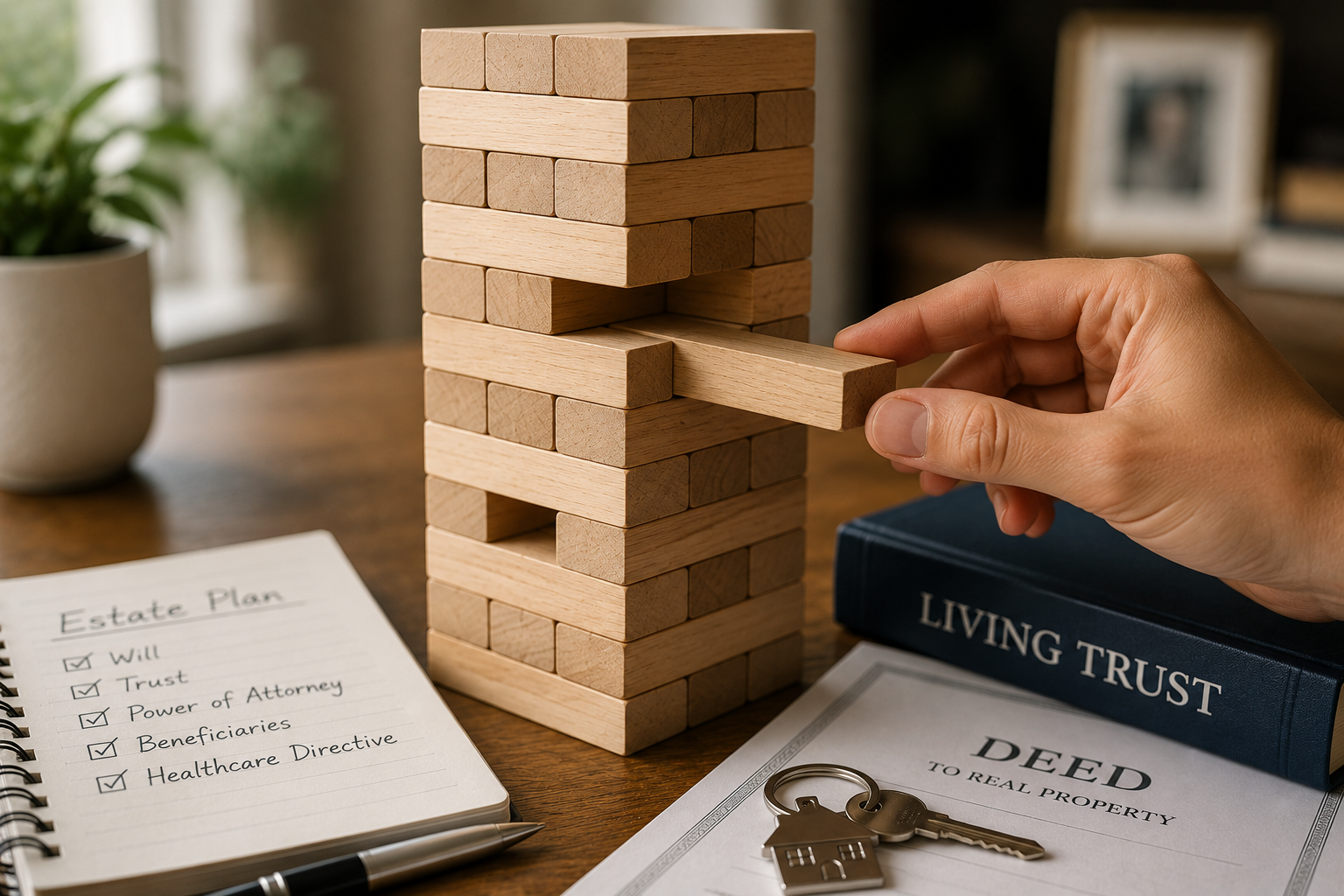
The problem is that estate planning is a system. Changing one piece without understanding how it affects everything else can create problems you never intended.
The Shortcut That Isn’t Always a Shortcut
Adding a child to the deed of your home can seem like an easy way to avoid probate. Sometimes people do the same thing with a bank account, a brokerage account, or other assets.
On the surface, it feels simple.
But here are just a few questions that don’t always get asked first:
What happens if your child gets divorced?
What if they are sued?
What if they pass away before you?
Could there be tax consequences when the home is eventually sold?
How will your other children feel if one child is now listed as an owner?
Those are important questions, and they often don’t come up until it’s too late to easily undo the decision.
If you’ve considered adding a child to your deed, download our free guide, The Trouble with Joint Tenancy. It explains the advantages, disadvantages, and common misconceptions of joint ownership before you make a decision.
It’s Usually Not a Bad Idea. It’s an Incomplete One.
One thing I want to be clear about: most people who make these decisions aren’t being careless. They’re trying to solve a real problem.
The issue is that they’re usually looking at one asset instead of the entire estate plan.
Estate planning isn’t about your house.
Or your bank account.
Or your retirement accounts.
It’s about how all of those pieces work together.
A change that seems perfectly reasonable in one area can unintentionally affect taxes, inheritances, family relationships, or even your overall estate plan.
The Same Thing Happens in Other Ways
Adding a child to a deed isn’t the only example.
I see people who:
- Add a child to a bank account.
- Download estate planning documents online.
- Create a Trust but never transfer assets into it.
- Update one beneficiary designation but forget about the others.
- Sign documents years ago and assume they’re still doing exactly what they want today.
Each decision may seem reasonable by itself. But estate planning doesn’t work one decision at a time. It works as a coordinated plan.
That’s why having documents and understanding them are not always the same thing.
You Don’t Know What You Don’t Know
One of the biggest differences between simply getting documents and having an estate plan is understanding the consequences of your choices.
A good planning process includes questions you may never have thought to ask:
What happens if one of your children dies before you?
What if someone becomes incapacitated?
Should your children inherit everything outright, or should there be protections in place?
How should your assets actually be distributed?
Those conversations are often more valuable than the documents themselves.
The Good News
Most of these issues can be avoided with proper planning. Estate planning doesn’t have to be complicated. It does need to be coordinated.
When your plan is built as a complete system, each piece supports the others. Your home, your accounts, your beneficiary designations, your Trust, your Will, and your incapacity planning all work together to accomplish what you want for your family. That’s a very different approach than making one change at a time and hoping it all fits together.
Ready to Protect Your Family the Right Way?
Most people start by learning how all of this works.
That’s why we offer a Free Estate Planning Class and an on-demand educational video. We explain Wills, Trusts, incapacity planning, probate, and many of the common misconceptions that lead families to make well-intentioned but costly mistakes.
Our goal is to help you understand your options first, so you can make informed decisions about what’s best for your family.
👉 Register for our next Free Estate Planning Class or watch the educational video
After you’ve attended the class or watched the video, if you’d like to explore creating or updating your own estate plan, we’ll be happy to schedule a consultation.